I Hardened This VM by Hand. Lynis Scored It 68/100.

A while back I hardened this Debian VM by hand — patched it, cut the attack surface, put a default-deny host firewall in front of it, sandboxed the custom services. I audited my own box and fixed the drift I found. The problem with auditing your own box is that you grade your own homework. You check the things you already think to check. So this time I handed the job to something that has no idea what I meant to do and only reports what’s actually there: Lynis, the system-auditing tool from CISOfy. It ran 274 tests and gave the VM a hardening index of 68 / 100. ...
20 July 2026 · 7 min
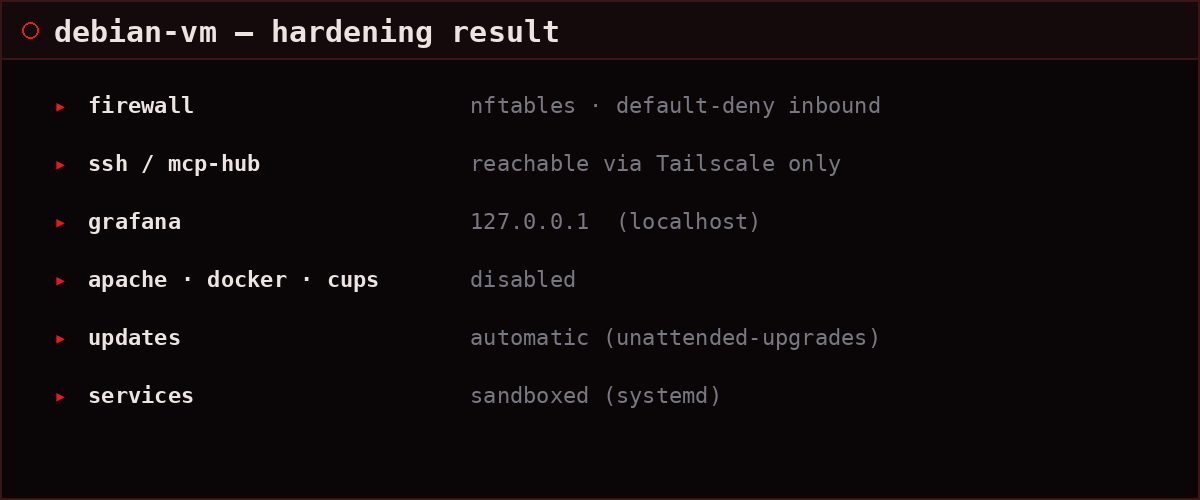
Terminal summary of the VM hardening result

Hardening My Debian Home-Lab VM — Even Behind pfSense

My Debian automation VM already sits behind a pfSense firewall with egress containment — it can reach the internet but not my home network. So why harden the VM itself? Because “behind a firewall” is doing less work than it sounds. Two paths reach into the VM without ever crossing pfSense, and an honest audit of my own box turned up drift I didn’t expect. This is the write-up: what the audit found, what I changed, and the systemd sandbox mistake that quietly broke a service. ...

7 July 2026 · 6 min
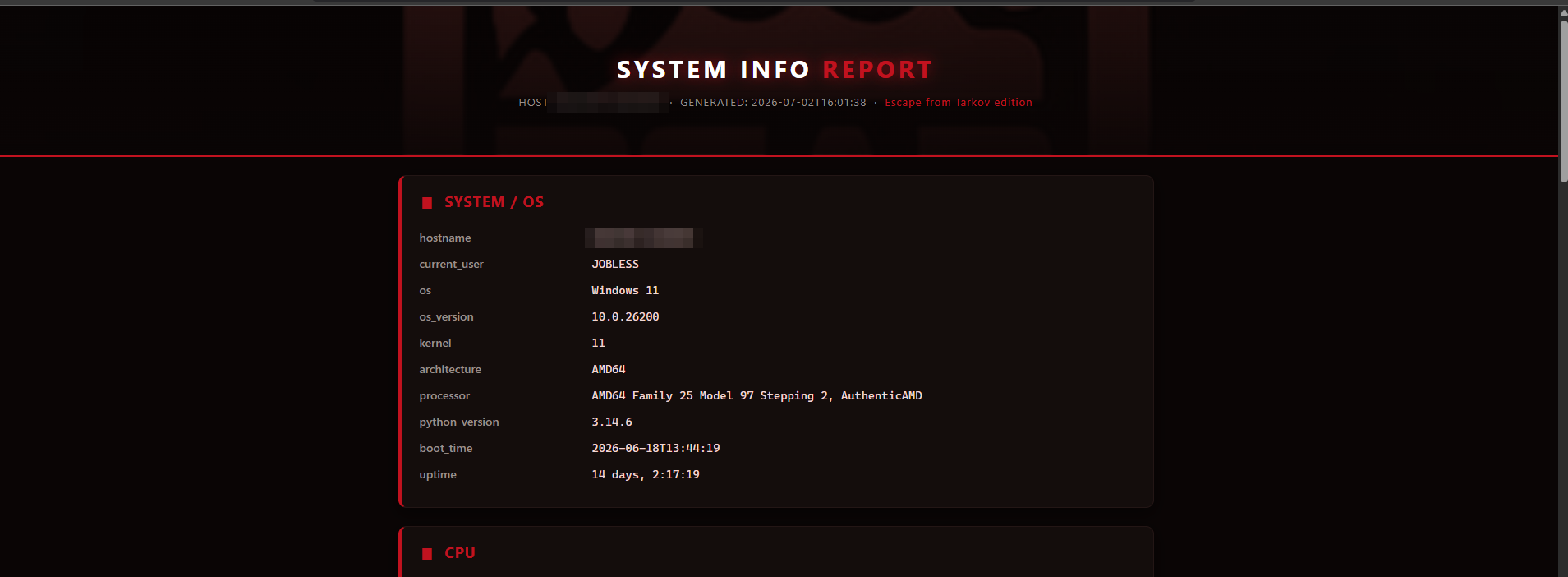
The Spec Grabber HTML report

Created a SystemInfo Grabber Program with Claude AI

I wanted a small desktop tool that captures a snapshot of a machine — hardware, resource usage, network state — and writes it to a styled HTML report viewable in any browser. Useful for quick system audits and for keeping a record of a machine’s specs over time. I built it in one Claude Code session (Opus 4.8) on my Debian 13 laptop, then packaged it for Windows as well. ...

2 July 2026 · 4 min
Arcadyan HWG2025 router

Hardening and Segmenting My Home Network on an Arcadyan HWG2025

This is a small home network — one router, a handful of devices. The point wasn’t complexity; it was applying the same discipline you would to a small office or lab environment. Treated that way, it doubles as practical study for Network+ and Security+. The router is an Arcadyan HWG2025 — the NBN-issued unit, Wi-Fi 7 with MLO, around 500 Mb down. An ISP router doesn’t give you much room to move, but it gives you enough to do this properly. ...

29 June 2026 · 3 min
The Hugo blog running on GitHub Pages

Self-Hosting a Hugo Blog with a Claude Code Publishing Pipeline

The blog you’re reading was published by the pipeline this post describes. Why Hugo, and why self-hosted I needed somewhere to document real technical work — networking, security, mod projects — that I could point to from LinkedIn. Hosted platforms were out: no content ownership, paywall friction, someone else’s branding. Hugo won on attack surface. It’s a single Go binary — no Node, no node_modules, no npm dependency tree to patch and audit. For a security portfolio, the blog itself should be as defensible as the work it documents. It builds to plain static files, so serving is trivial; the trade-off is owning uptime and patching, which for this use case is a feature. ...

29 June 2026 · 3 min