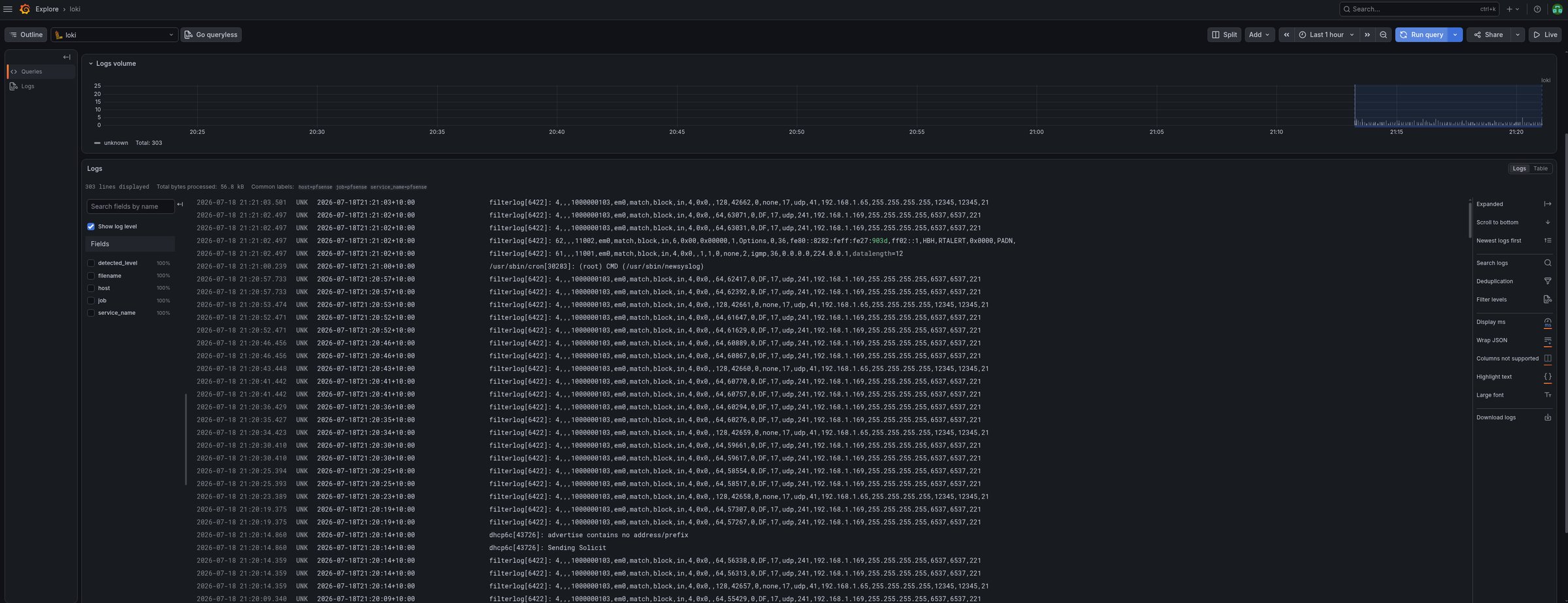
Grafana Explore showing pfSense firewall logs flowing through Loki, with a log-volume chart above

Building a Homelab SIEM with Loki — Reading My Logs Instead of Hoping

I had dashboards showing me numbers — CPU, memory, network throughput. What I didn’t have was any way to answer “what actually happened?” When did someone try to log in? What did the firewall block? Those answers live in logs, and my logs were scattered across machines, unread. This post is how I pulled them into one searchable place. That’s a SIEM — Security Information and Event Management — and you can build a simple one at home. ...
19 July 2026 · 7 min

Metrics You Have to Remember to Look At Aren't Monitoring

I’d had Grafana dashboards for months. What I didn’t have was anything that told me when something broke — I had to remember to look. This is the alerting layer that fixes that, built on top of the existing Prometheus stack, plus the three things that got in the way. Stack: Prometheus · Alertmanager · ntfy · Docker 1. The gap I’d been ignoring My lab had a healthy observability stack: Prometheus scraping metrics, node_exporter for the host, snmp_exporter pulling throughput off pfSense, all drawn in Grafana. It looked complete. ...

18 July 2026 · 12 min

A Backup You Haven't Restored Is a Hypothesis

The identity provider quietly became load-bearing and had no backup. Building one taught me more about database internals than building the identity provider did. Stack: Bash · Postgres · SQLite · age · cron · OneDrive 1. Purpose The identity provider started as a nice-to-have. Single sign-on for a dashboard — pleasant, not critical. Then it took over the firewall’s login. That’s the moment the risk profile changed, and it changed without any decision being made about it. Nobody sat down and said “let’s make the firewall depend on this container.” It happened one integration at a time, and the dependency graph grew quietly underneath. ...

16 July 2026 · 9 min
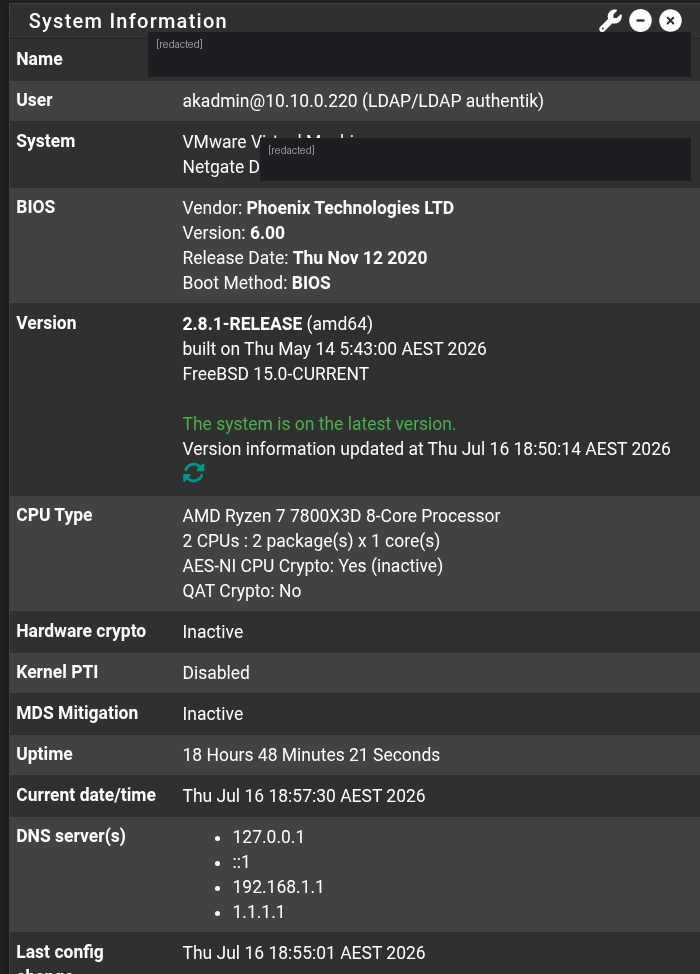
Logged into pfSense as an identity-provider account over LDAP

Making the Firewall Authenticate Against My Identity Provider — and Proving the Bug Wasn't Mine

Bringing pfSense’s admin login into Authentik with MFA — via RADIUS, which turned out to be broken upstream, and then via LDAP, which wasn’t. This is as much about how you prove a bug isn’t yours as it is about the build. Stack: Authentik · pfSense · Docker · LDAP · RADIUS 1. Purpose With an identity provider already running and Grafana logging in through it, the obvious next question was: how far does this go? ...

16 July 2026 · 13 min
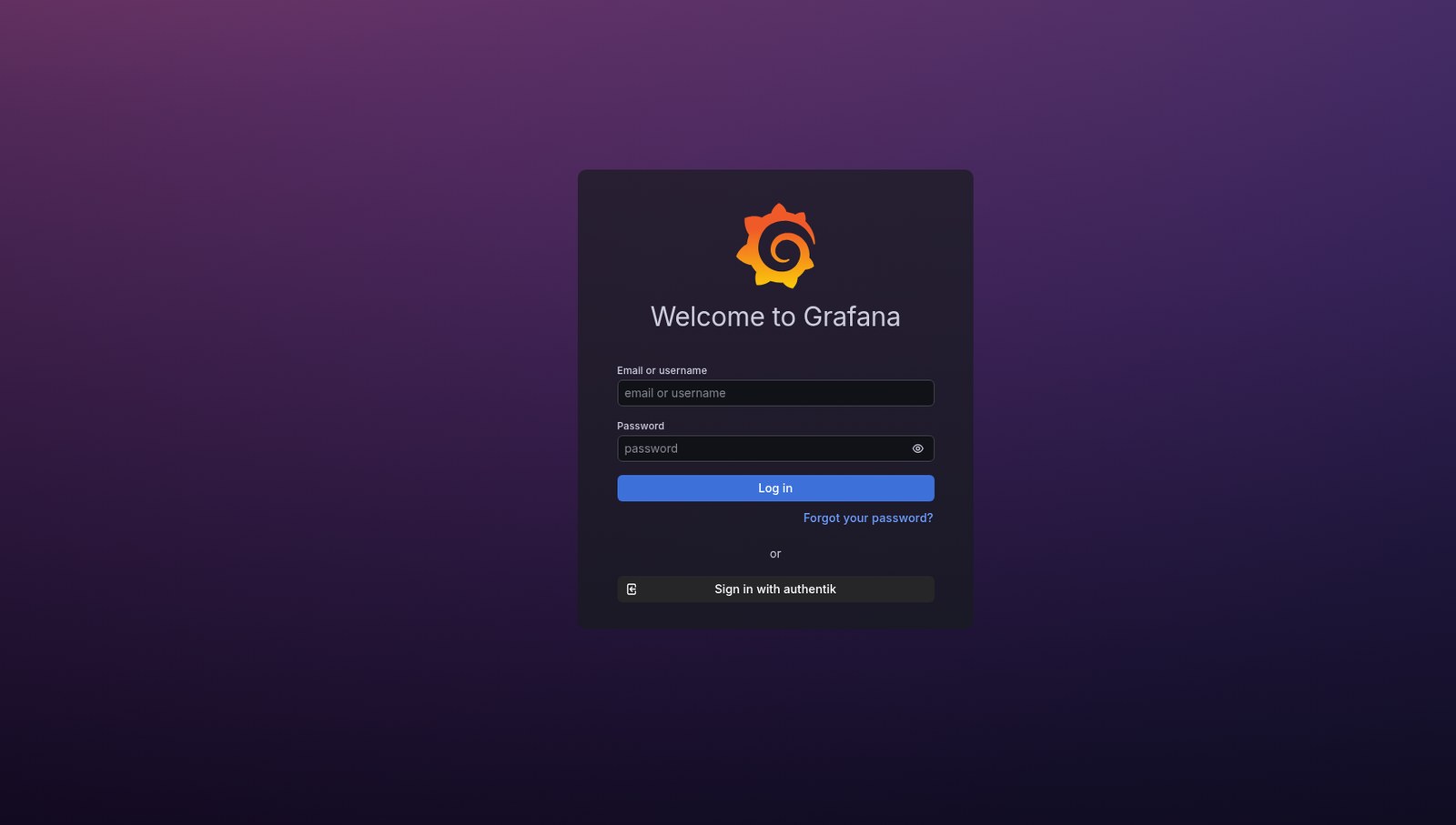
Grafana's login page with a Sign in with authentik button

One Login, MFA Everywhere: Adding an Identity Provider to the Homelab

Deploying Authentik as a self-hosted identity provider, and wiring Grafana into it with OIDC — so a service that has never heard of MFA suddenly requires it. Stack: Authentik · Caddy · Grafana · Docker · Debian 1. Purpose Every self-hosted service arrives with its own login. Ten services means ten accounts, ten passwords, and ten places to forget to enable MFA. Worse, some services have no authentication at all and just quietly assume nobody hostile is on your network. ...

15 July 2026 · 9 min
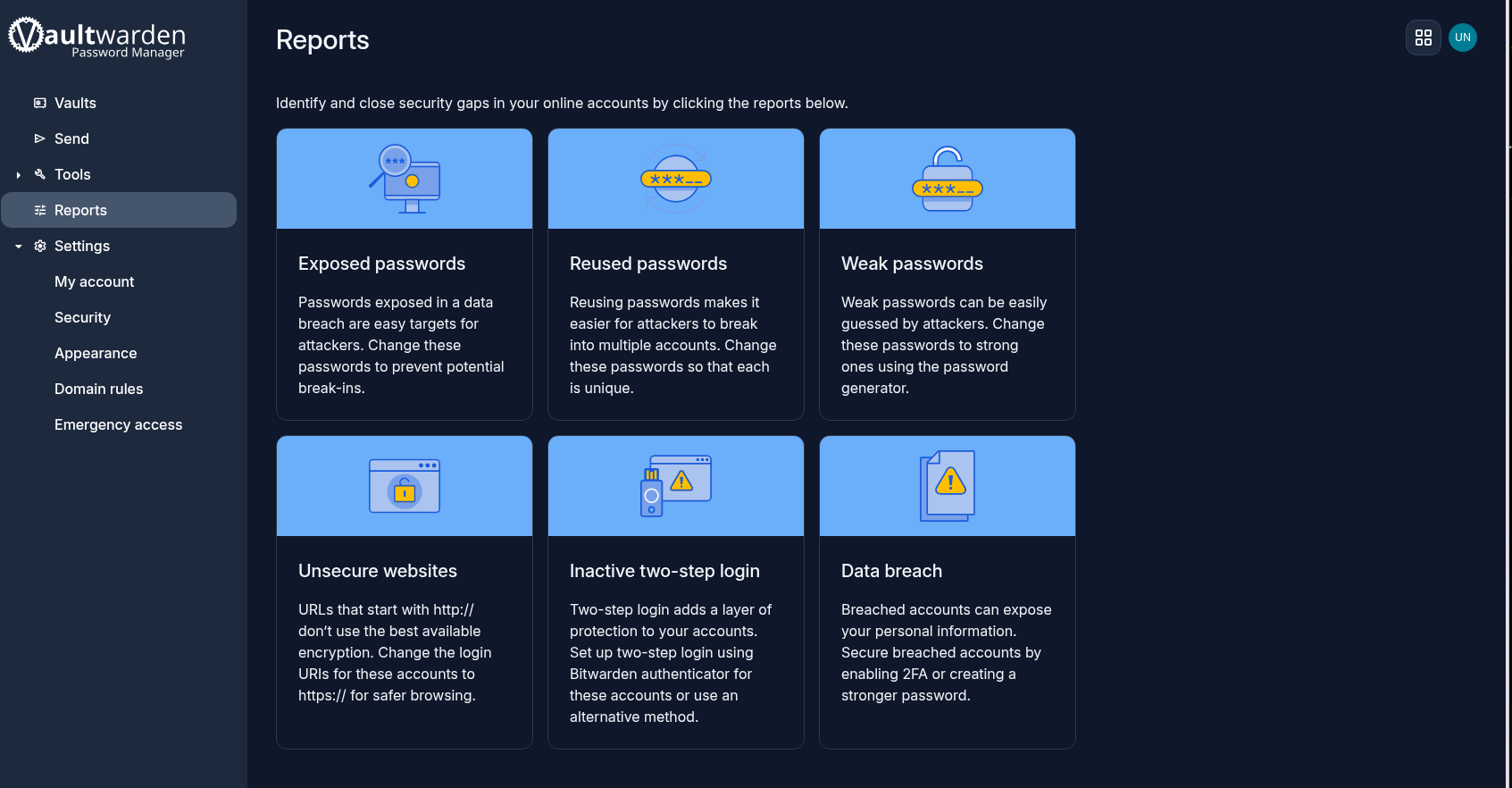
The self-hosted Vaultwarden vault, logged in and showing its security reports

Self-Hosting a Password Manager the Hard Way: Vaultwarden, Caddy, and Three Firewalls Fighting

Building a self-hosted password vault with a genuinely trusted TLS certificate and zero inbound ports open to the internet — and the four-layer debugging session that stood between me and a working container. Stack: Debian 13 · Docker · Caddy (custom build) · Vaultwarden · pfSense · WireGuard · DuckDNS 1. Purpose Self-hosted services are easy to do badly. It’s trivial to run a container, forward a port, click through a certificate warning, and call it done — and end up with something less secure than the cloud service you replaced. ...

15 July 2026 · 11 min
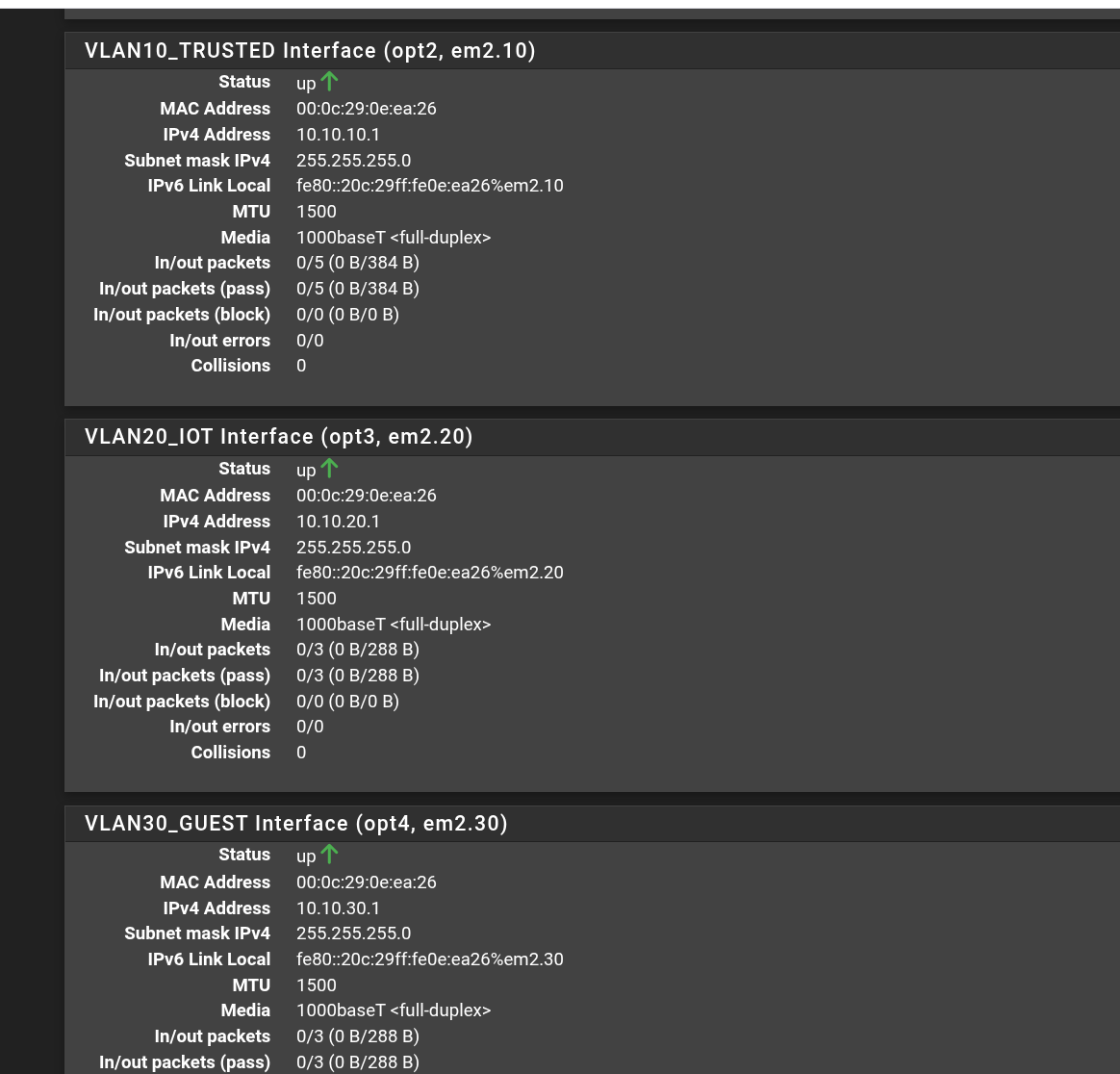
All three VLAN interfaces online at their gateway IPs on pfSense

Virtual VLAN Segmentation on pfSense — Three Isolated Zones, No Managed Switch

A flat network trusts every device on it equally. A smart plug, a guest’s phone, and the machine holding my important data all share one space — so if any one of them is compromised, the attacker can reach the rest. Network segmentation breaks that flat space into separate zones and controls what may cross between them, shrinking the blast radius of any single compromise. I wanted to build that properly — VLANs and a firewall — on VMware Workstation with pfSense CE, and design three zones at deliberately different trust levels: ...

12 July 2026 · 8 min
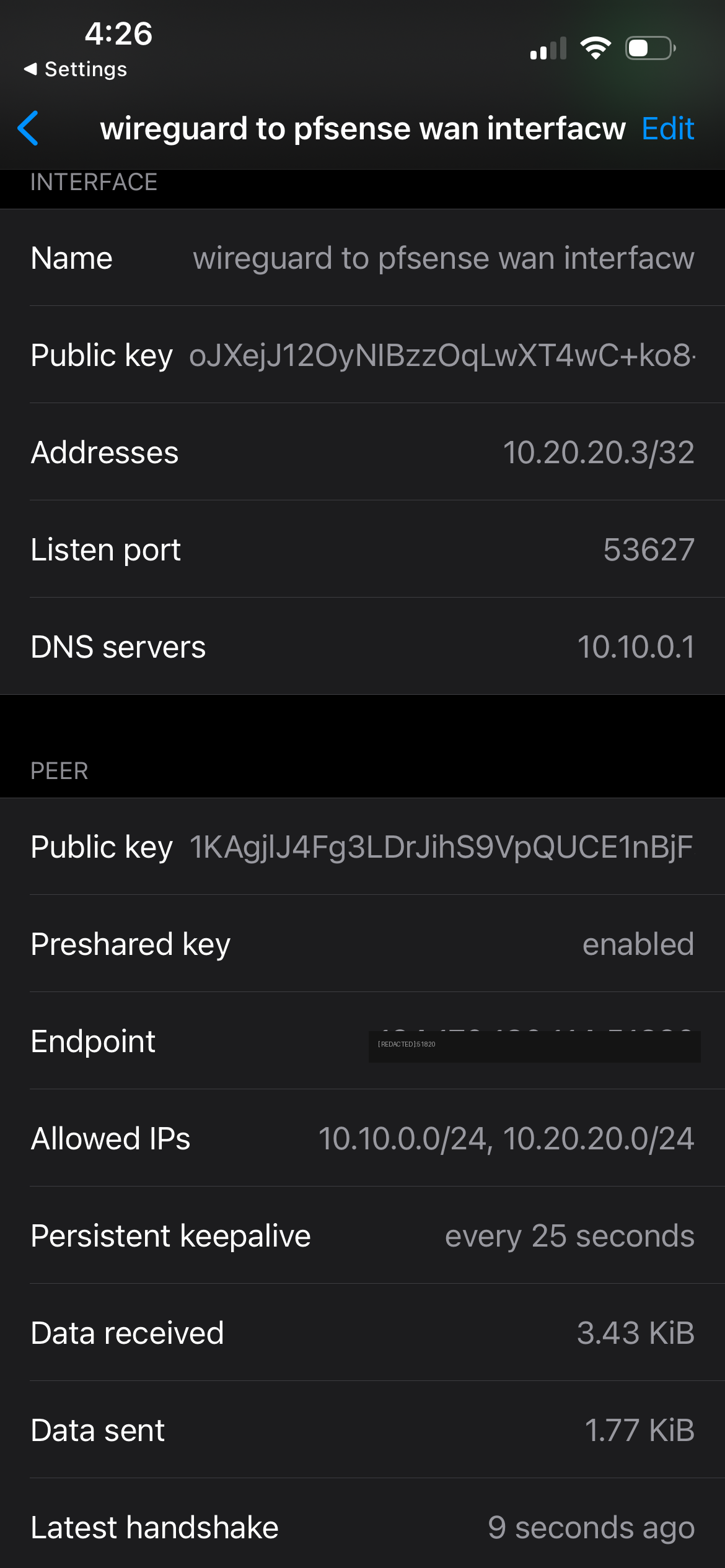
WireGuard handshake established over mobile data

Self-Hosted WireGuard Through a Nested Firewall — and the Four-Layer Debug to Make It Work

My lab is deliberately isolated — an automation VM (CLAUDDEB) sits behind a virtual pfSense firewall on a segment (10.10.0.0/24) that my home network can’t reach. That isolation is great until you’re out of the house and want to check your Grafana dashboards, which only listen inside that segment. I already use Tailscale for casual remote access, and I’ll be honest up front: for pure convenience, Tailscale wins — it punches through NAT automatically with zero firewall work. But this project wasn’t about convenience. It was about building the thing Tailscale is made of. Tailscale is WireGuard under the hood; hand-rolling raw WireGuard on pfSense teaches you how VPNs actually work — keys, peers, routing, firewall rules, NAT — at a level the managed tool deliberately hides. So I built it from scratch, kept Tailscale as my daily driver, and got a genuinely brutal debugging lesson in the process. ...

11 July 2026 · 7 min