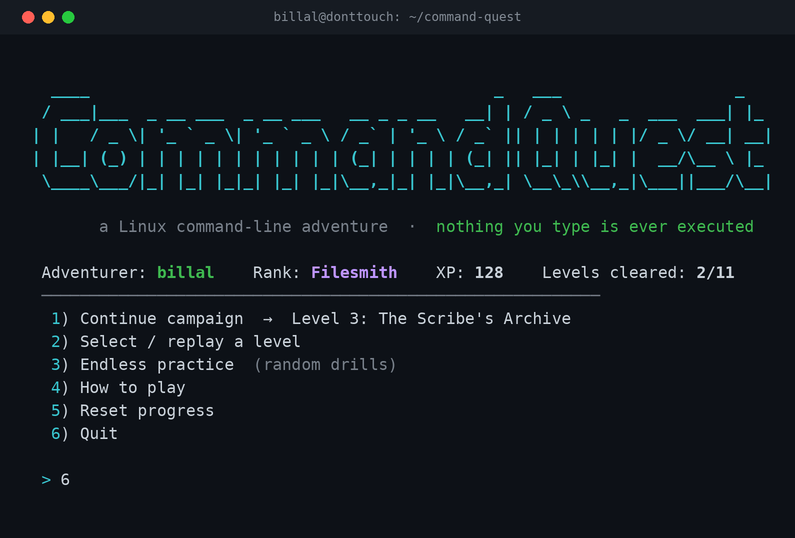
Command Quest main menu — an ASCII logo and a colourful terminal game menu

Command Quest — I Got Claude to Build Me a Linux CLI Practice Game

I’m not a programmer, and I’m not trying to be one. But the development of new AI models has let me learn concepts that were once too complicated for me to get on my own. As you know, I use Linux a lot — but I still wanted to properly upskill in the command line. So instead of just following a document and re-typing commands in another terminal window, I thought: why not get Claude to build me an interactive game — a Linux CLI practice terminal — that actually lets me learn and memorise the commands? ...
21 July 2026 · 4 min
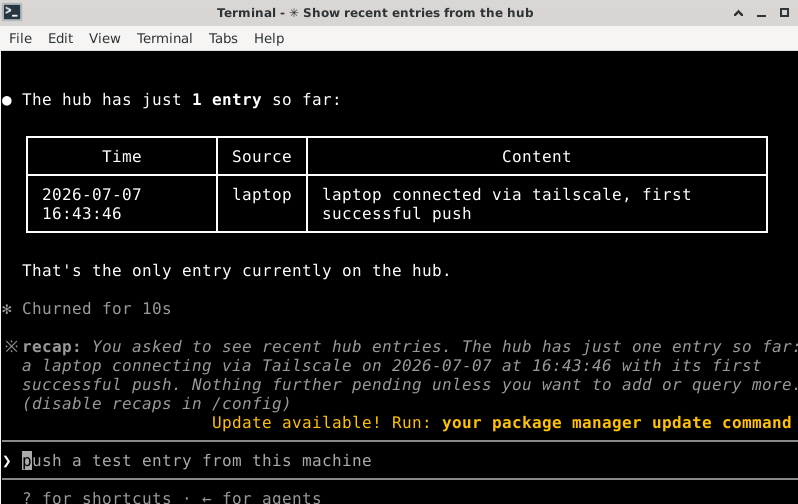
A note pushed from the laptop appearing on the hub via get_recent

Syncing Claude Code Across Devices with a Custom MCP Hub over Tailscale

I run Claude Code on two machines: the Debian VM in my home lab (always on) and a Debian laptop (sleeps, roams, follows me to campus). I wanted the laptop to push notes, facts, and findings into a central store on the VM — from any network — so the home-lab agent could pick them up later. Claude Code’s built-in Remote Control turns a second device into a remote window onto one session. That’s not what I wanted. I wanted both machines to stay fully independent agents, linked through a shared tool. So I built a small MCP server on the VM and pointed the laptop’s Claude Code at it: the hub becomes just another tool the laptop can call. ...

7 July 2026 · 6 min
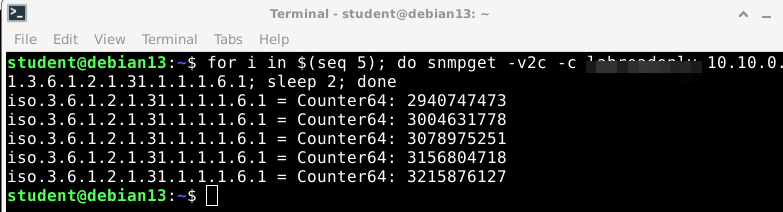
pfSense WAN byte counter climbing under SNMP polling

Implementing LaMetric TIME to Network Part 2

In part 1 I got a LaMetric Time showing live health from my home lab over MQTT, so it worked across my network isolation — CPU, memory, disk, uptime, and the automation VM’s own traffic, all from a single Debian box. Useful, but those were really that box’s stats. The frame the display was named for is my network’s throughput — the traffic crossing my firewall — and that data lives on pfSense, not the Debian box. This is the follow-up: pulling real WAN in/out rates off pfSense over SNMP and putting them on the display. It’s shorter than the MQTT build, because the pipeline already exists; all I’m adding is a new data source. Getting numbers out of pfSense is the part worth writing down. ...

6 July 2026 · 8 min
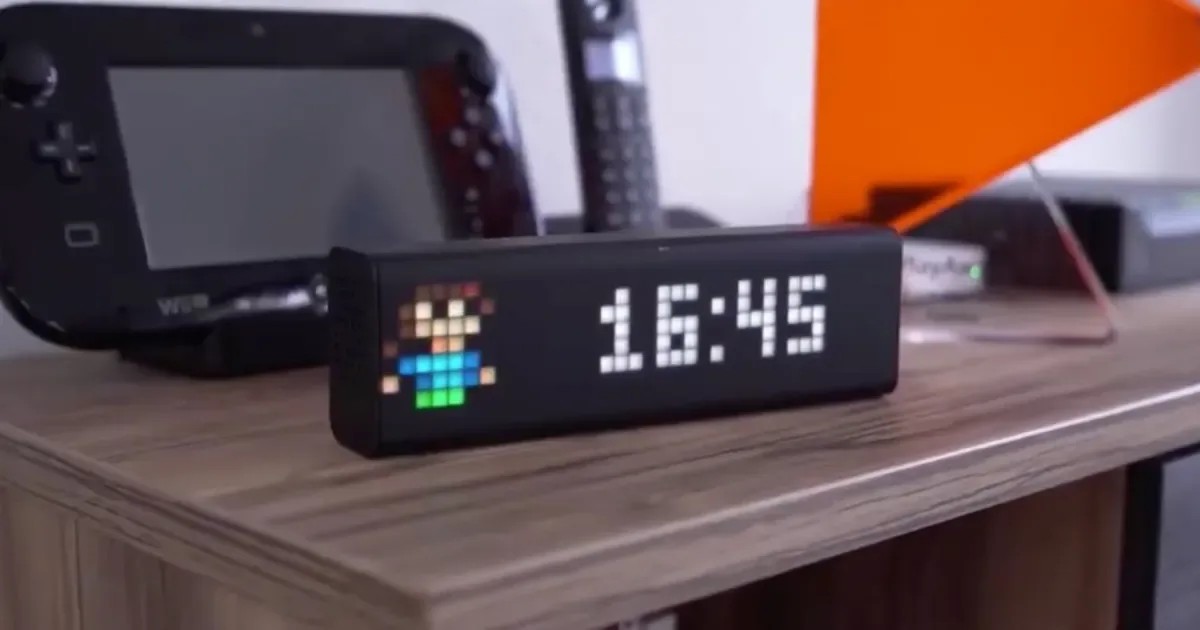
A LaMetric Time smart display

Implementing LaMetric TIME to Network

I picked up a LaMetric Time — an 8x37 pixel smart display — and after locking it down on an isolated guest network, the next move was to make it useful: live health from my home lab. CPU, memory, network throughput — the numbers worth a glance. The interesting part is that a constraint I’d deliberately built into my network dictated the whole architecture. This is the write-up: the design decision, the pipeline, and the gotchas — because the gotchas are the useful part. ...

5 July 2026 · 7 min
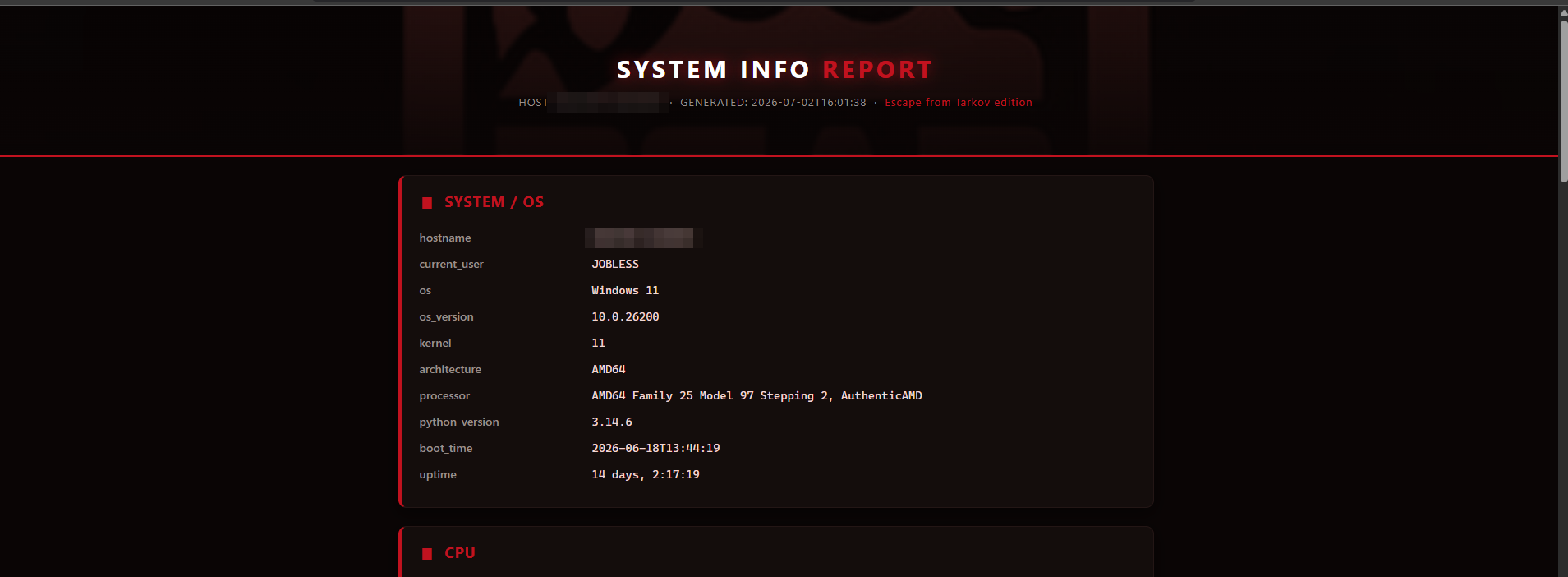
The Spec Grabber HTML report

Created a SystemInfo Grabber Program with Claude AI

I wanted a small desktop tool that captures a snapshot of a machine — hardware, resource usage, network state — and writes it to a styled HTML report viewable in any browser. Useful for quick system audits and for keeping a record of a machine’s specs over time. I built it in one Claude Code session (Opus 4.8) on my Debian 13 laptop, then packaged it for Windows as well. ...

2 July 2026 · 4 min